Real Estate Development Partnerships
The second business area developed directly on this website.
Real Estate Investment & Partnership Solutions
We provide integrated real estate investment and advisory services, supporting investors throughout the entire investment lifecycle — from opportunity identification and initial assessment to acquisition, development, financing and exit. Different investors require different levels of control, participation and diversification. Screenproject therefore provides access to several investment and partnership structures, allowing the most appropriate model to be selected according to each investor's objectives, capital allocation and risk profile.
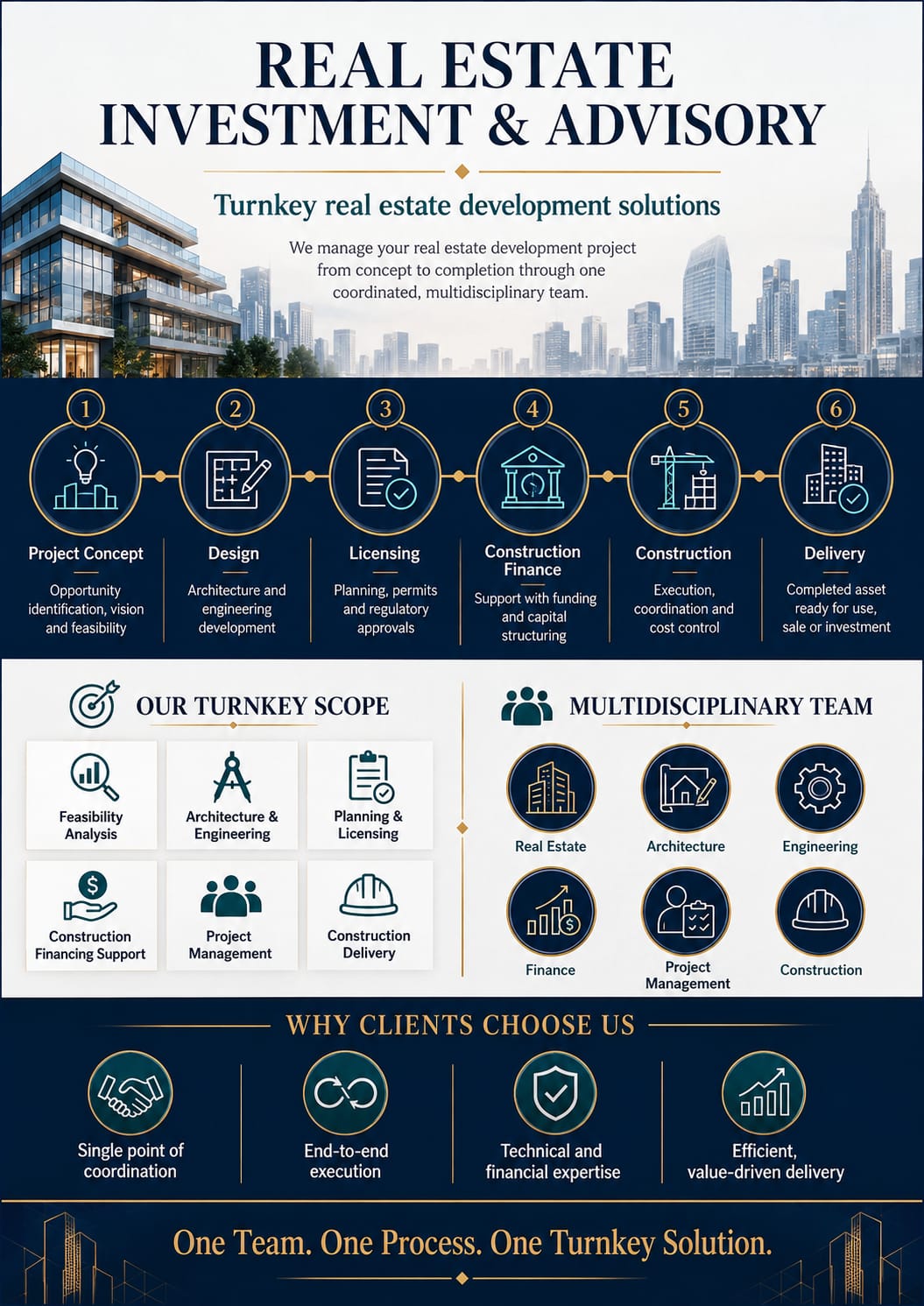
For investors seeking a dedicated real estate investment strategy tailored to their own objectives. Screenproject identifies, analyses and manages investment opportunities according to an agreed investment mandate, while acting as local development and project management partner.
For landowners, investors and partners seeking to combine land, capital and Screenproject's development and execution capabilities. Through structured development partnerships, including CAEP arrangements where appropriate, each party contributes agreed resources to the project and participates in the resulting value creation according to the contractual framework established.
The appropriate structure depends on the investor's objectives, desired level of participation, investment horizon, risk profile and capital commitment. Screenproject works with investors and their advisers to identify the most suitable framework for each opportunity.